
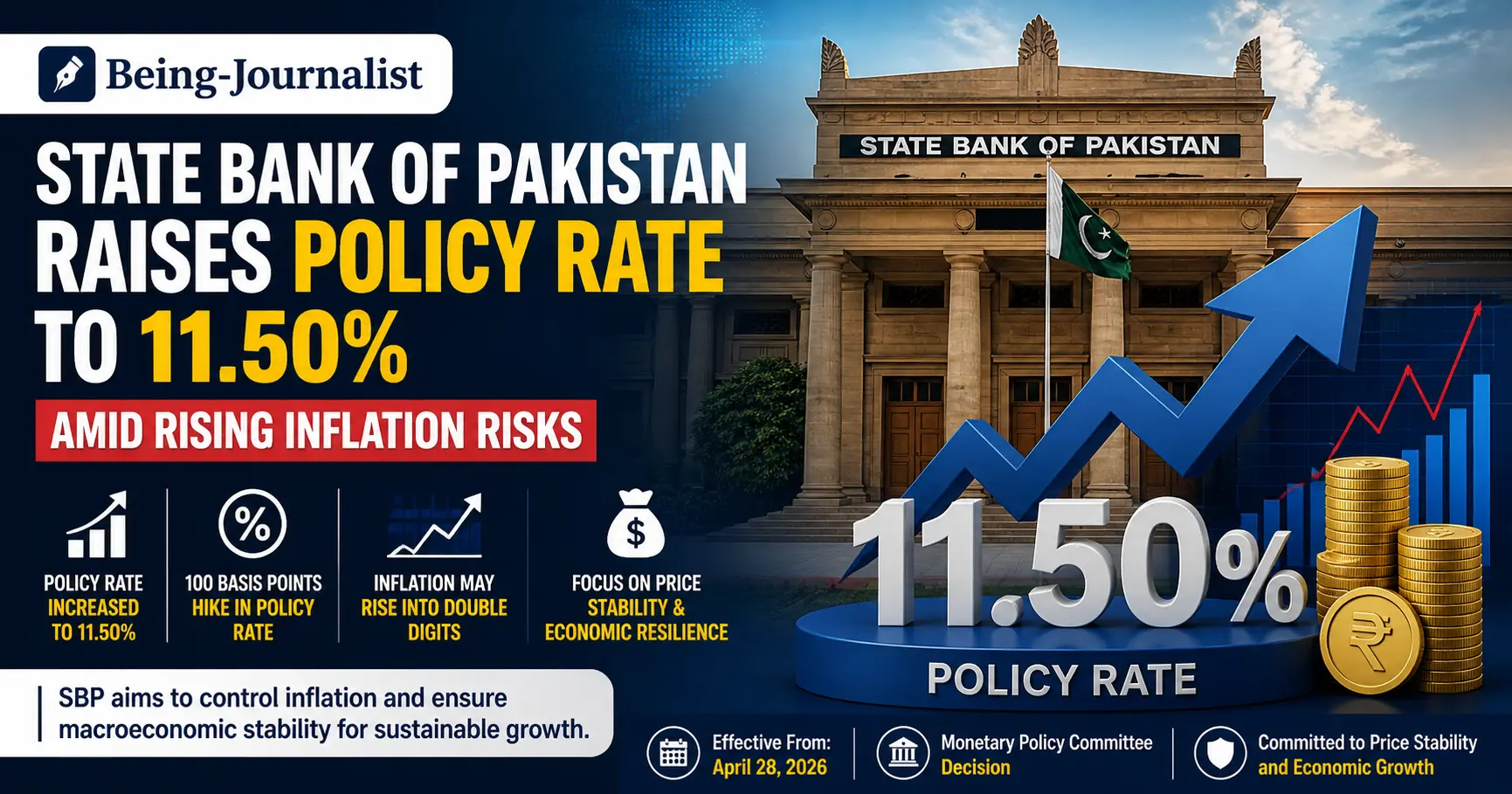
The SBP increases the policy rate to 11.50% to control inflation. The State Bank of Pakistan (SBP) has announced a significant shift in its monetary stance by increasing the policy rate by 100 basis points to 11.50%, effective April 28, 2026. This decision reflects growing concerns over inflationary pressures and global economic uncertainty. For the official announcement, visit: https://www.sbp.org.pk
Why Did SBP Increase the Policy Rate?
The Monetary Policy Committee (MPC) highlighted several global and domestic factors behind this decision:
- Ongoing geopolitical tensions in the Middle East
- Rising global energy prices
- Increased transportation and insurance costs
- Persistent supply chain disruptions
These factors have heightened risks to Pakistan’s macroeconomic stability, prompting SBP to adopt a tighter monetary policy.
Inflation Outlook in Pakistan
Inflation continues to be a major concern:
- Consumer inflation reached 7.3% in March 2026
- Core inflation increased to 7.8%
According to SBP projections:
- Inflation may rise into double digits in upcoming months
- It is expected to remain above the 5–7% target range through FY2027
Economic Performance and Key Indicators
Despite inflationary pressures, some economic indicators show improvement:
- GDP Growth: 3.8% (compared to 1.9% last year)
- Industrial Output Growth: 5.9%
- Current Account: Slight surplus
- Foreign Exchange Reserves: $15.8 billion (April 2026)
However, the sustainability of this growth depends on external conditions and policy consistency.
Impact on Agriculture Sector
The agriculture sector, critical for Pakistan’s economy,faces mixed outcomes:
- Wheat production fell below initial estimates
- Rising fuel and fertilizer costs may increase input expenses
Key Challenges for Farmers
- Higher cost of cultivation
- Pressure on profit margins
- Market price volatility
Fiscal Challenges and Government Response
Pakistan’s fiscal position remains under pressure:
- Tax shortfall reached Rs. 611 billion
- Rising oil prices increasing subsidy burden
- Fiscal deficit risks remain elevated
The government may need to:
- Implement structural tax reforms
- Control public spending
- Expand targeted subsidies for vulnerable sectors
Future Outlook for Pakistan’s Economy
The SBP emphasized that maintaining macroeconomic stability is essential for sustainable growth.
Key Priorities Ahead
- Strengthening external accounts
- Increasing foreign exchange reserves
- Continuing structural reforms
Economic growth in FY2026 is expected to remain near the lower bound of earlier projections, with risks tied to global geopolitical developments.
Practical Implications for Businesses and Farmers
For Farmers
- Monitor input costs closely
- Diversify crops to manage risk
- Stay updated on market trends
For Businesses
- Prepare for higher borrowing costs
- Optimize operational efficiency
- Adjust pricing strategies carefully
Conclusion
The decision by the State Bank of Pakistan to raise the policy rate to 11.50% underscores the urgency of controlling inflation amid global uncertainty. While this move may stabilize prices in the long run, it also presents short-term challenges for businesses, farmers, and consumers. for more news visit